About the workshop
The sixth International tandemPV Workshop ran 17–19 June 2026 at the Akademie der Künste in Berlin, hosted by Helmholtz-Zentrum Berlin. It gathered 214 attendees from 21 countries for 127 presentations spanning silicon, tandem and thin-film photovoltaics, materials science, and device engineering. This report highlights the talks and posters most relevant to perovskite-based tandem PV, with each slide or poster shown in place.
Lead leakage and safety
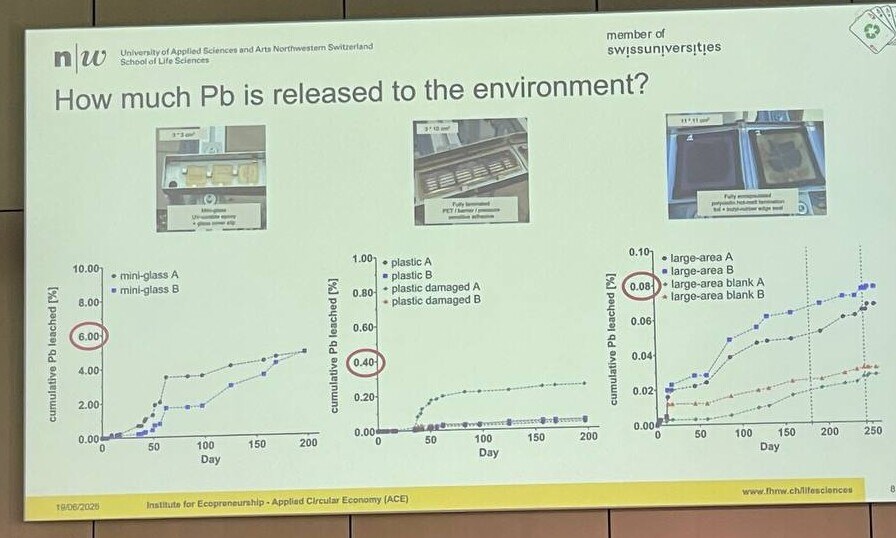
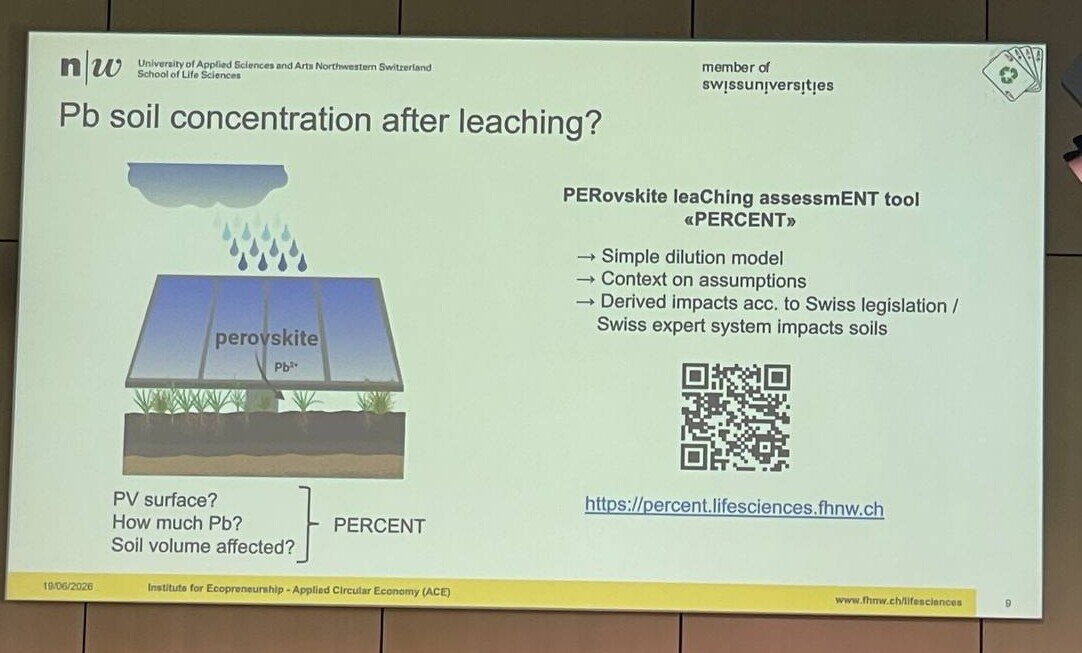
The Pb-leaching slides frame environmental risk as probability multiplied by impact. Unencapsulated perovskites degrade rapidly in water, releasing Pb2+ and halide ions. Robust encapsulation strongly suppresses release, but damaged modules, weak edge seals, transport breakage, outdoor storage and improper disposal can create local soil-risk scenarios.
Large-area encapsulated samples showed cumulative Pb release below about 0.08%.
Weakly encapsulated mini-glass samples showed release at the percent level.
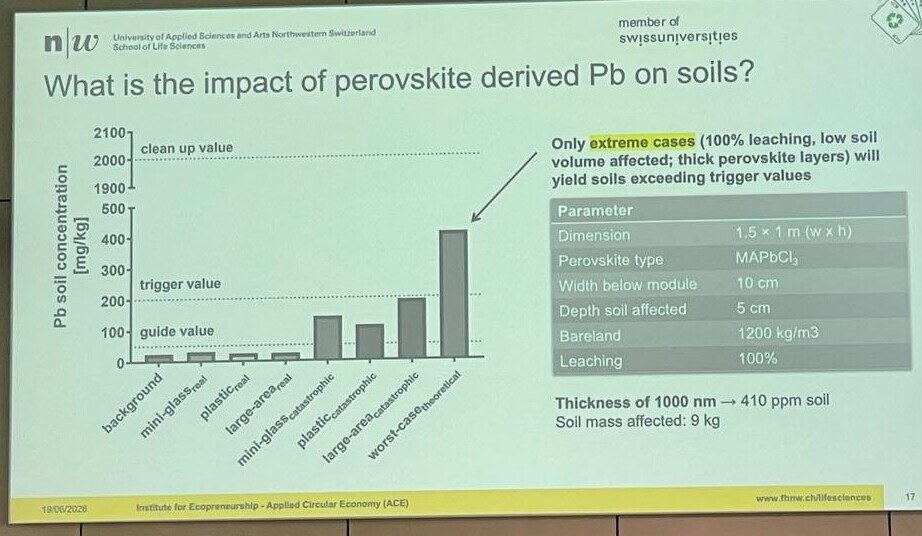
Worst-case model: 100% leaching, thick perovskite and small affected soil mass gave about 410 mg/kg Pb.
This exceeds a 200 mg/kg trigger value but remains below a 2000 mg/kg clean-up value.
Pb tends to sorb in topsoil, reducing immediate deep migration but increasing local accumulation risk.
Machine learning for stability-aware optimization
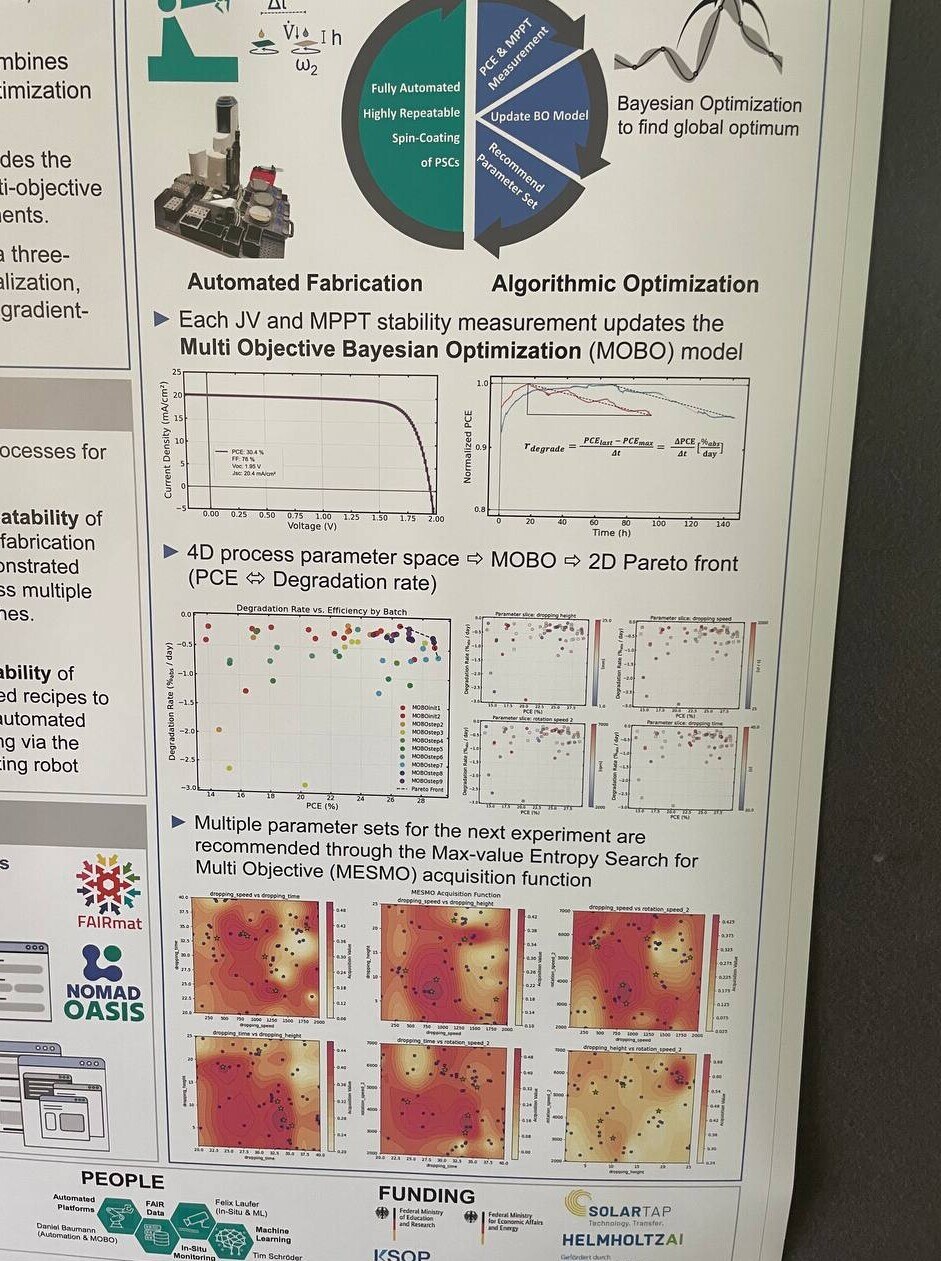
The machine-learning poster is important because it optimizes stability together with efficiency. The workflow links automated spin coating, J-V measurement, MPPT stability measurement, and multi-objective Bayesian optimization. Each measurement updates the model and the model recommends the next parameter sets.
Input space: four-dimensional process parameter space.
Outputs: PCE and degradation rate.
Optimization target: PCE-degradation Pareto front, not maximum initial PCE alone.
Acquisition function: MESMO recommends multiple next experiments.
Scientific value: it can reject recipes that look good initially but degrade quickly.
Scale-up and process reproducibility
The scale-up slides emphasize blade coating, high-throughput processing, Bayesian optimization and automated screening. The scale-up problem is not simply making a large film; it is maintaining film uniformity, crystallization control, contact quality and stability across batches. The workshop images repeatedly connect process windows with stability, not just PCE.
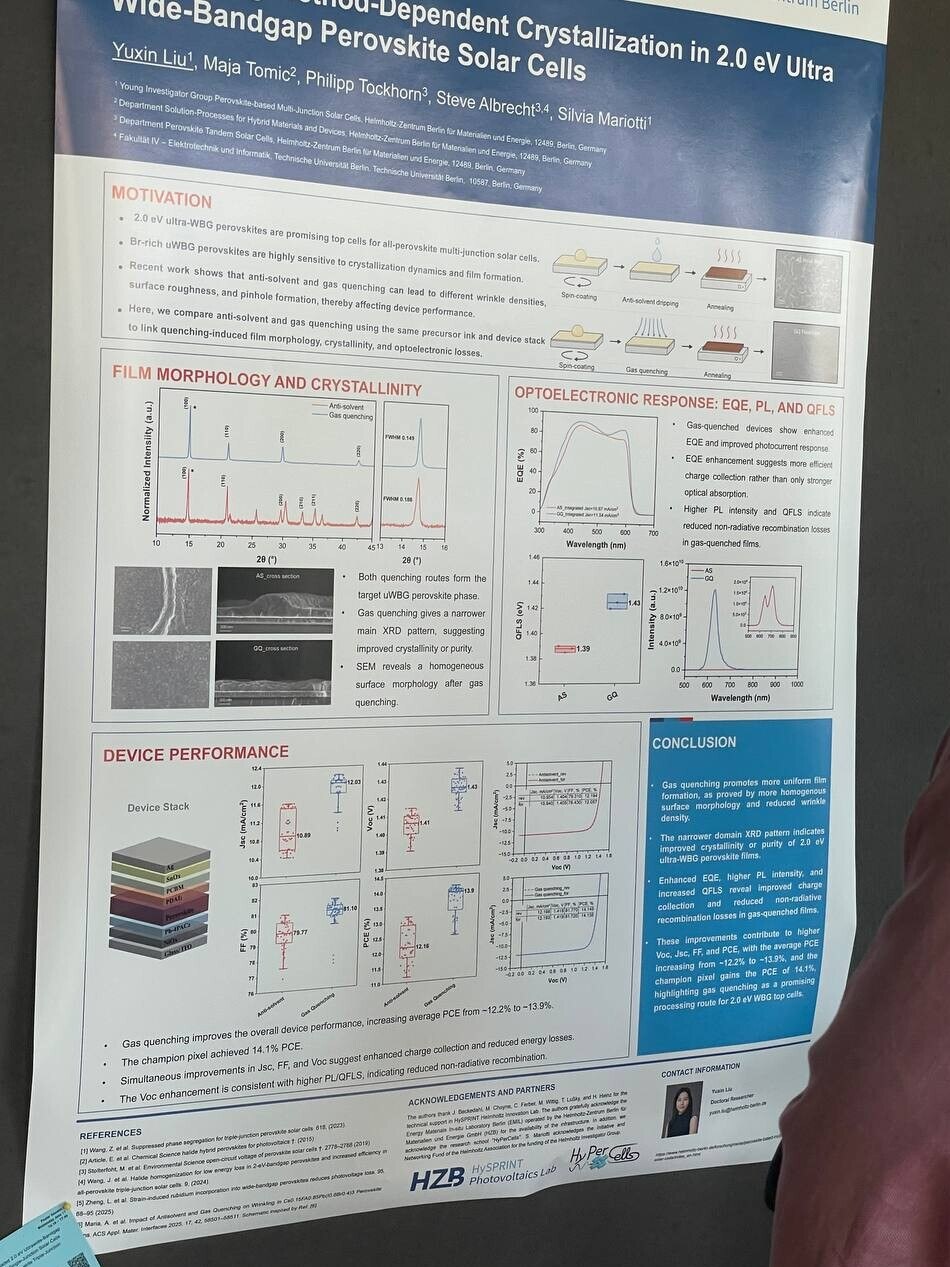
Blade coating and gas quenching address large-area morphology and crystallization.
Bayesian optimization reduces experimental burden in multi-parameter process spaces.
A process that gives high PCE only in a narrow window is weak for manufacturing.
2D seeds and additive stabilization
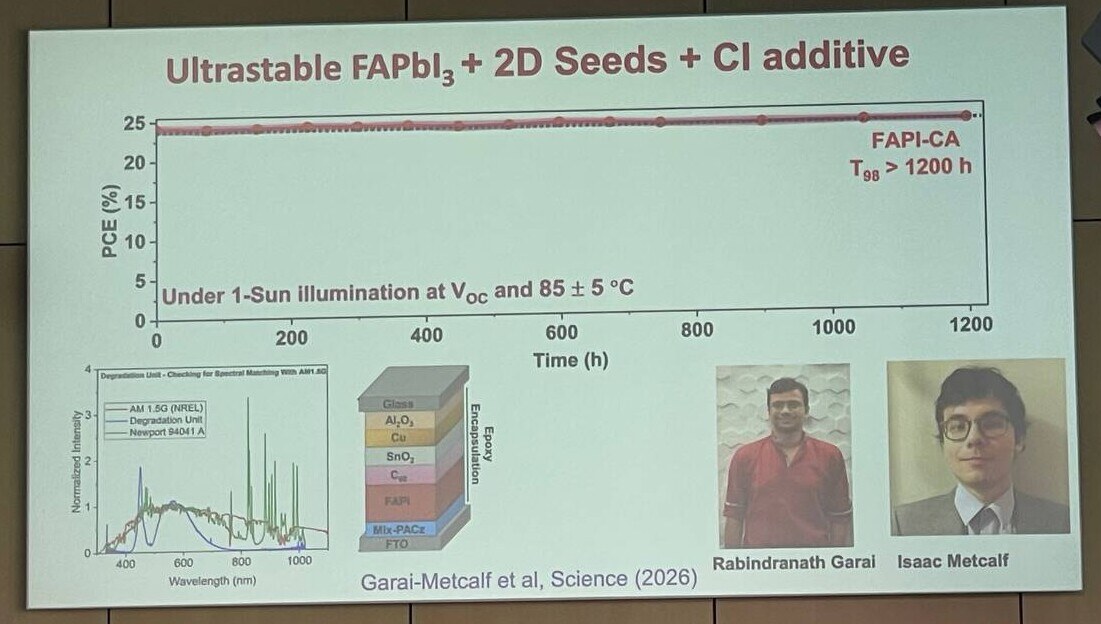
The clearest 2D-related stability result is FAPbI3 with 2D seeds and Cl additive. The slide reports T98 > 1200 h under 1-sun illumination at Voc and 85 +/- 5 C, with PCE around the mid-20% range. The interpretation is that small amounts of 2D/seed chemistry can stabilize a 3D absorber by regulating nucleation, orientation, defect density and ion migration.
The role of 2D seeds is not to replace 3D FAPbI3, but to guide and stabilize it.
Cl additive likely improves crystallization and reduces defect-assisted degradation.
This result supports the idea that low-dimensional perovskite chemistry can be used without a large efficiency penalty.
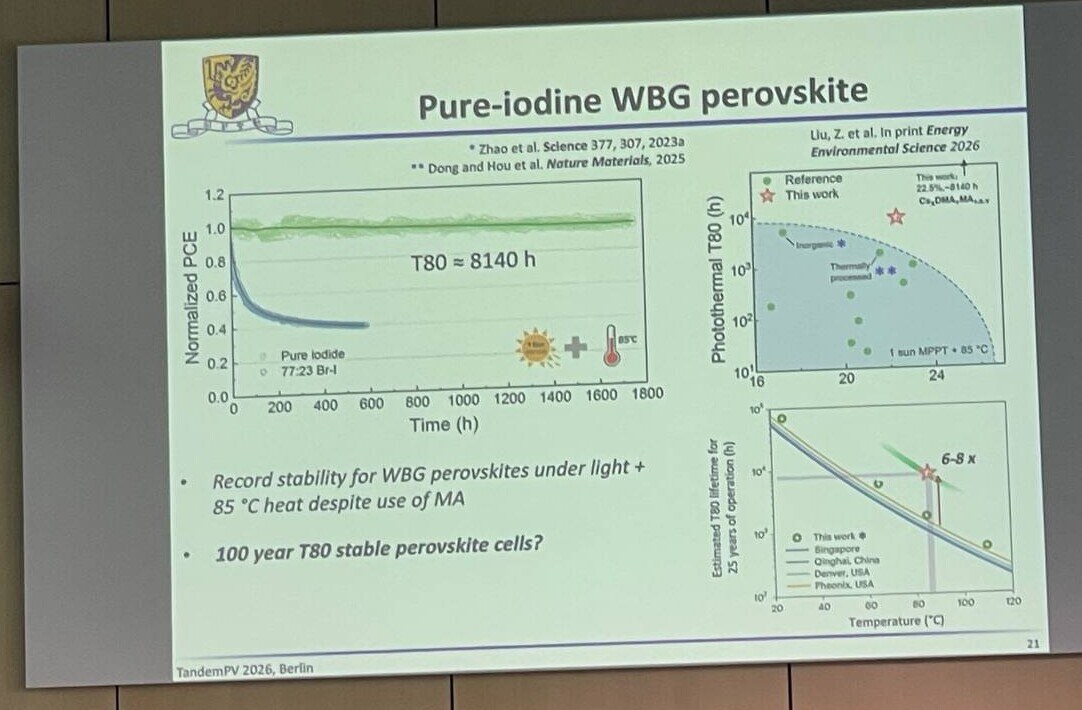
A second stability slide reports pure-iodine WBG perovskite with T80 around 8140 h, suggesting that WBG stability may be achievable without relying on highly Br-rich compositions.
SAM and HTL molecular interface design
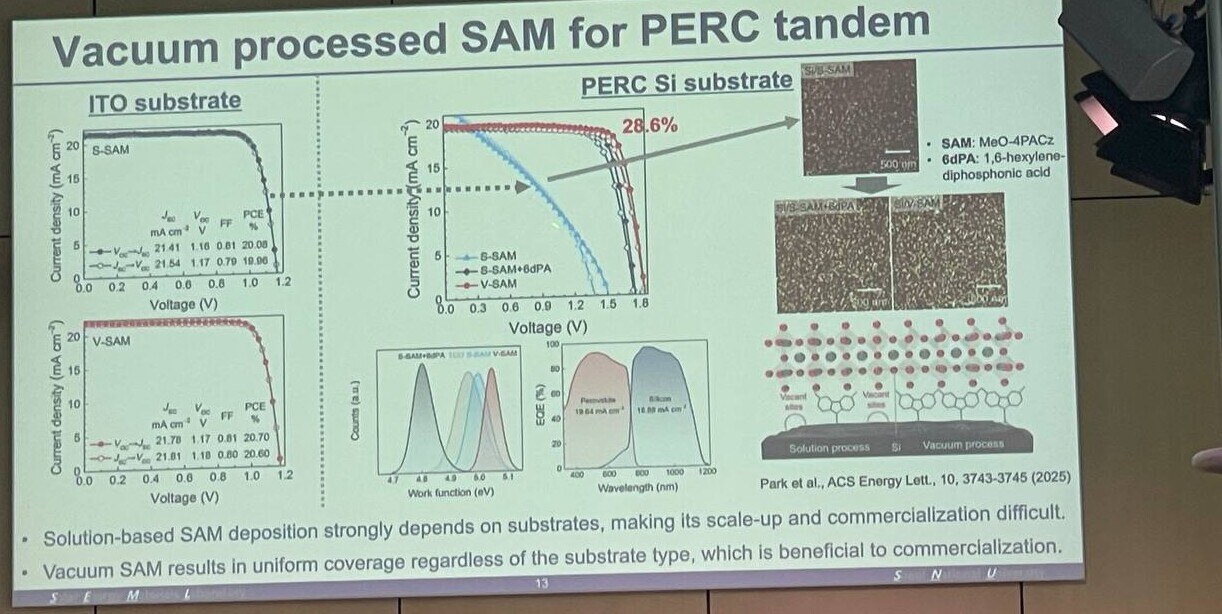
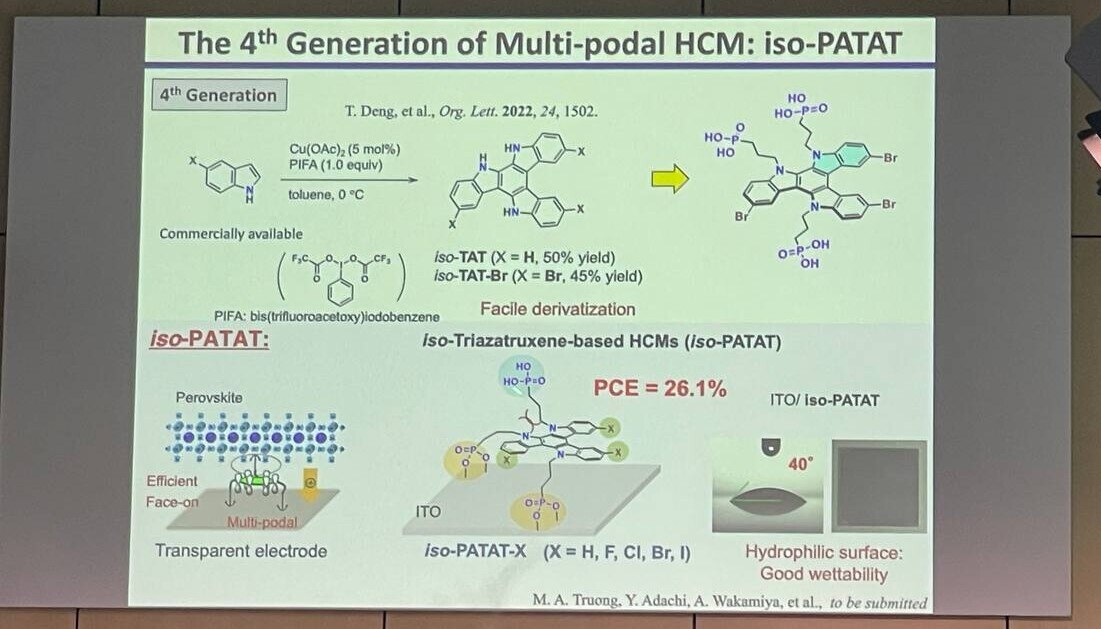
The SAM-related slides share one design logic: reduce interfacial recombination while improving hole selectivity, energy alignment, substrate anchoring and processing compatibility. This matters strongly for industrial tandem devices because textured Si, TCO surfaces and NiOx layers make uniform molecular coverage difficult.
F-modified SAMs tune molecular dipoles and valence-band alignment.
Vacuum-processed SAMs reduce substrate dependence and improve coverage uniformity.
PATAT / iso-PATAT multi-podal molecules use multiple anchoring sites to improve binding to TCO and durability.
Boroxine-linked polymer HCMs introduce a cross-linked hole-collection layer for better chemical and mechanical stability.
A NiOx/iso-PATAT-Br device showed about 26% PCE in the presented slide.
WBG and ultra-WBG top-cell stability
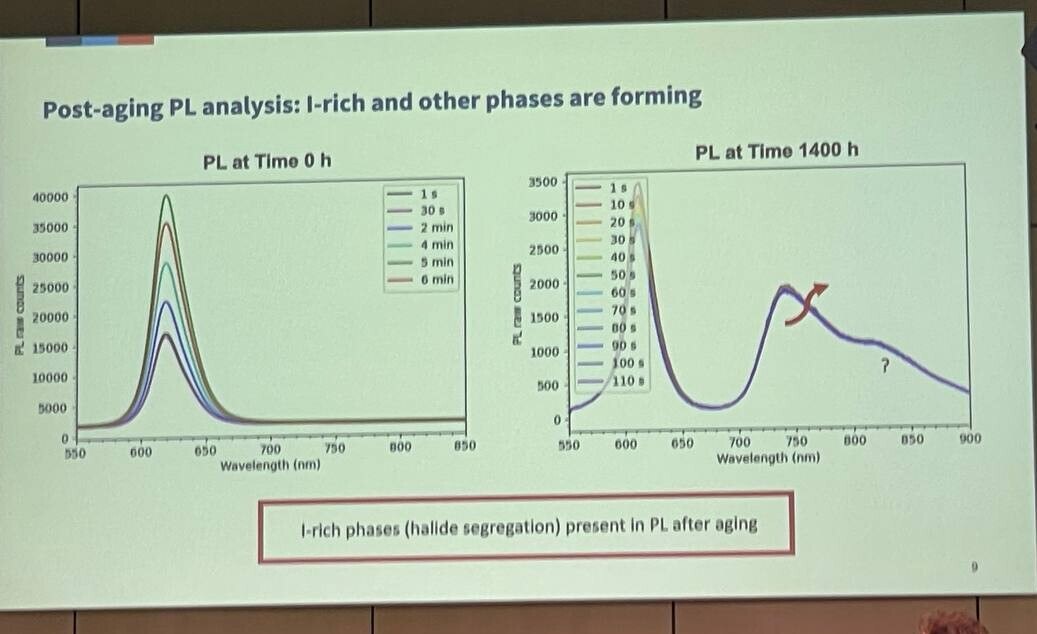
Wide-bandgap perovskites are the key top-cell material for tandem current matching. The main difficulty is that Br-rich compositions raise the bandgap but also increase halide segregation, ionic losses, hysteresis and rapid T80 decay. Several slides emphasize that WBG optimization is a stability problem as much as an optical design problem.
Cs can suppress halide segregation, but excessive Cs may reduce extraction or voltage.
FA improves carrier lifetime and hole extraction, but needs phase stabilization.
Aged PL spectra are used as direct evidence for I-rich phase formation or halide segregation.
Vacuum processing and direct characterization
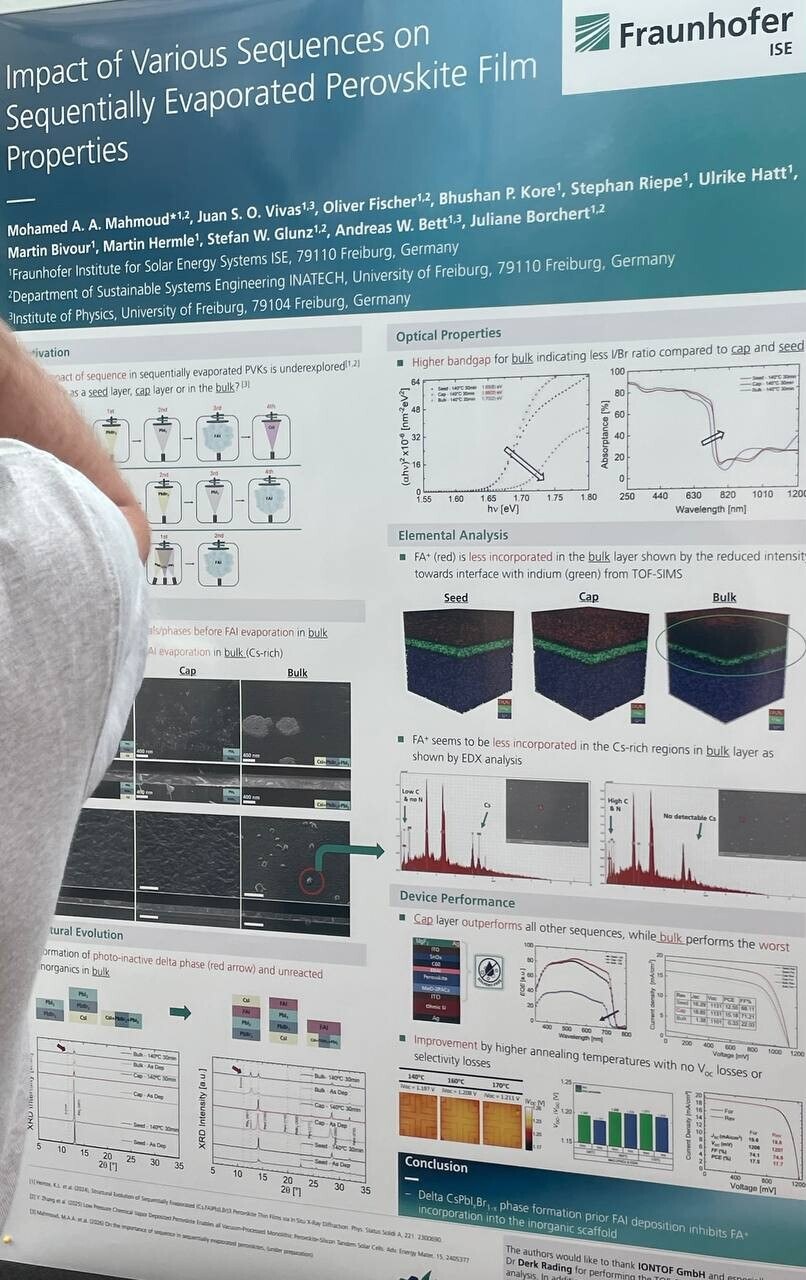
The sequential-evaporation poster shows that precursor sequence changes the final film. The cap-layer route appears more favorable than the bulk route, while bulk deposition can lead to poorer FA incorporation, Cs-rich regions, and less favorable device response; cap-layer films show lower recombination and better charge collection. The important point is methodological: vacuum processing needs depth-sensitive and recombination-sensitive characterization, not only final J-V curves.
TOF-SIMS and EDX are used to verify FA/I/Br/Cs depth distribution.
XRD and SEM show phase formation, crystallinity and morphology.
PL and QFLS show recombination loss and potential Voc loss.
EQE separates charge-collection improvement from optical absorption changes.
Outdoor validation and metrology
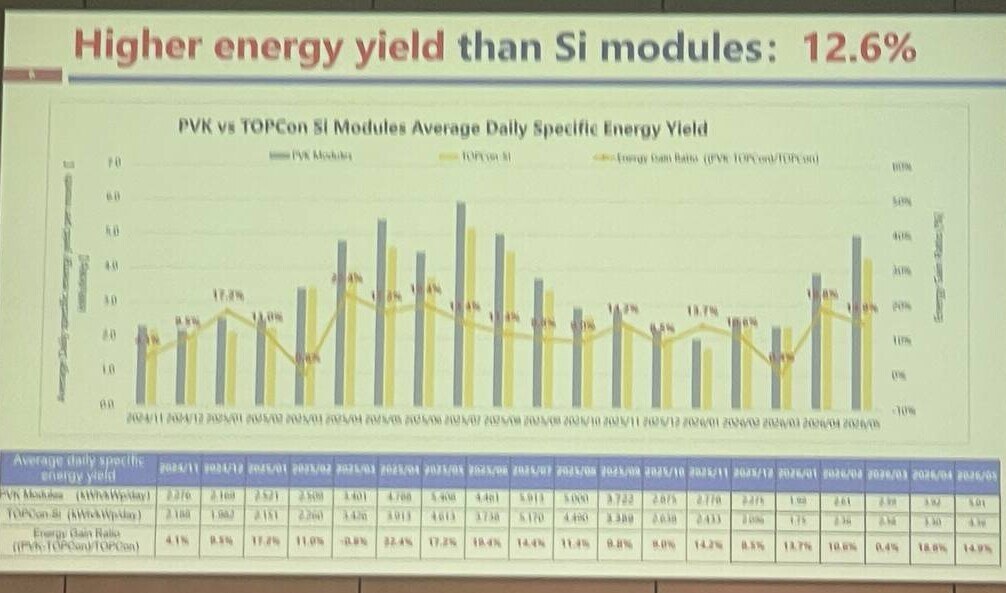
Outdoor slides show that module value must be evaluated by energy yield, not only laboratory PCE. Some tandem modules show higher daily or average energy yield than Si reference modules; one slide reports about 12.6% higher energy yield than Si modules. At the same time, module variability, partial failure and thermal signatures remain visible.
MPPT tracking is more relevant than fast-sweep J-V for operational stability.
Scan direction, scan speed, spectrum and light soaking can alter measured performance.
Tandem certification needs calibrated top-cell and bottom-cell spectral handling.